1. The Genesis of a Modern Concrete Solution
(Water Reducer)
Concrete is the most eaten synthetic material in the world, 2nd only to water in worldwide use. Yet for all its universality, the essential chemistry of concrete has remained incredibly regular for over a century, up until current years brought a quiet revolution in the form of sophisticated chemical admixtures. Amongst these, the water reducer stands as probably the most transformative advancement, essentially altering how concrete is blended, positioned, and healed throughout the world’s construction sites. The trip of this technology from laboratory interest to vital building and construction asset is a tale of clinical perseverance, market evolution, and the unrelenting pursuit of structural excellence.
The modern-day water reducer market has actually become a multi-billion-dollar sector, with international concrete water reducers and plasticizers market projected to reach an approximated $20.07 billion in 2025, climbing at a durable compound annual growth rate of 8.6 percent via 2033. This phenomenal growth mirrors not just the expansion of international building task yet a basic change in how the sector approaches concrete efficiency, durability, and sustainability. The water reducer, specifically in its innovative polycarboxylate forms, has ended up being the keystone of contemporary high-performance concrete, allowing frameworks that were previously difficult and expanding the service life of framework worldwide.
Comprehending the water reducer calls for valuing its necessary function: it enables concrete to maintain workability while significantly reducing the water content required for mixing. This reduction in water, usually by 25 to 45 percent in high-performance formulas, substantially improves concrete toughness, sturdiness, and resistance to ecological deterioration. The innovation has progressed via 3 distinctive generations, from the early lignosulfonate-based reducers through the naphthalene and melamine sulfonate formulas of the 2nd generation, to the existing dominance of polycarboxylate ether-based superplasticizers that stand for the 3rd and most innovative generation.
2. The Rise of Polycarboxylate Technology
(Water Reducer)
The polycarboxylate-based water reducer represents a standard shift in concrete chemistry. Unlike its predecessors, which relied on relatively easy electrostatic repulsion mechanisms to distribute cement bits, the polycarboxylate particle utilizes a comb-like structure with a foundation that adsorbs onto cement fragments and side chains that create steric obstacle, a physical barrier that avoids particle pile even more successfully than charge-based repulsion alone. This molecular style, established through years of polymer chemistry research study, enables premium diffusion with dramatically lower dosage rates, making polycarboxylate water reducers both even more efficient and more affordable over the life of a concrete project.
The market has actually responded enthusiastically to these benefits. The global polycarboxylate ether market is projected to increase from USD 7.51 billion in 2025 to USD 9.03 billion by 2031. Within this more comprehensive group, the powder kind of polycarboxylic acid water minimizing agent has actually become an especially dynamic sector, with the global powder polycarboxylate water reducer market getting to approximately 795 million USD in 2025 and projected to grow to 852 million USD in 2026, reaching 1.274 billion USD by 2032 at a compound annual development rate of 6.9 percent. Different projections recommend even stronger growth, with the solid polycarboxylate water reducer market approximated at 957 million USD in 2025 and anticipated to get to 1.569 billion USD by 2032, standing for a CAGR of 7.3 percent.
This growth trajectory mirrors the powder type’s distinctive benefits over liquid options. Powdered polycarboxylate water reducers provide exceptional storage space stability, reduced transportation expenses, and better flexibility in application, particularly in areas where fluid dealing with infrastructure is restricted. The powder style also allows specific application in automated batching systems and gets rid of the requirement for specialized storage tanks and pumping devices, making it especially eye-catching for large-scale facilities tasks and ready-mix operations in creating markets.
3. The Development of Water Reducer Chemistry
(Water Reducer)
The technical trip of the water reducer has actually been noted by continuous advancement in molecular design and synthesis. This chapter takes a look at the three major generations that have actually defined the industry, each building upon the lessons of its precursor.
3.1 Initial Generation: Lignosulfonates and Early Solutions
Early generations of water reducers, mostly lignosulfonates and sulfonated naphthalene formaldehyde condensates, achieved water decrease rates of 10 to 20 percent yet experienced considerable restrictions including inadequate retention of workability gradually, incompatibility with particular cement kinds, and ecological concerns connected to their production procedures. These first-generation products, while revolutionary in their time, can not fulfill the demands of contemporary construction where high-rise buildings, long-span bridges, and intricate infrastructure tasks call for specific control over concrete buildings across prolonged positioning home windows.
3.2 2nd Generation: Sulfonated Melamine and Naphthalene
The 2nd generation, featuring sulfonated melamine formaldehyde and improved naphthalene-based solutions, used much better efficiency however still dealt with the balance in between initial fluidness and downturn retention, the maintenance of workability gradually that is crucial for big pours and transferred concrete. These items represented an incremental enhancement yet could not achieve the water decrease rates and rheological control required by increasingly intricate concrete layouts.
3.3 3rd Generation: Polycarboxylate Ether Superplasticizers
It was the introduction of polycarboxylate ether-based superplasticizers that truly transformed the industry, offering water decrease prices going beyond 25 percent, outstanding depression retention, and compatibility with a wide variety of concrete structures. These third-generation water reducers achieve their superior efficiency through the aforementioned comb-like molecular structure, where the polymer foundation anchors to cement fragments while the polyethylene oxide side chains prolong right into the surrounding water, creating a steric stabilization result that preserves particle diffusion much more successfully than electrostatic repulsion alone.
Recent years have actually experienced an acceleration in water reducer modern technology growth, driven by both performance demands and sustainability imperatives. Scientists have created novel molecular designs consisting of star-shaped polycarboxylate superplasticizers prepared with free-radical polymerization, offering enhanced dispersion performance and lowered sensitivity to cement composition variants. Ester-ether copolymerized polycarboxylate superplasticizers represent another development, giving enhanced viscosity reduction and reduced air entrainment properties that enhance concrete finishability and surface area quality. The development of tricarboxylate ended EPEG polycarboxylate superplasticizers attends to the performance restrictions caused by extreme side chain size in standard formulas, where curled and fallen down conformations impair dispersing performance.
Perhaps most considerably, scientists have pursued methods to decrease dependence on petroleum-based resources with the adoption of stiff side chain support and multidentate sychronisation anchoring approaches. These innovations line up with wider market patterns towards sustainable building products and minimized carbon footprints, as the concrete industry accounts for approximately 8 percent of worldwide co2 emissions, mainly from concrete manufacturing. By allowing lower cement web content in concrete mixes while keeping or enhancing performance, progressed water reducers contribute straight to emissions decrease goals. The eco-friendly water reducer segment has ended up being a details direction, with plan targets calling for that green admixtures comprise no much less than 70 percent of admixture usage in new construction tasks. Low-carbon water reducers are targeting carbon discharge strength decreases of 45 percent contrasted to 2020 baseline levels.
4. The Production Excellence Behind Powdered Water Reducers
(Water Reducer)
The manufacturing of premium polycarboxylic acid water reducing agent powder needs innovative production processes that integrate polymer chemistry experience with specific design controls. Advanced thermal synthesis innovation, employed by leading producers, enables the manufacturing of powder polycarboxylate superplasticizers that show superb water reduction effects, superior slump retention, and superior versatility to different cement types while maintaining ecological compatibility. The production process includes the careful polymerization of monomers consisting of acrylic acid and polyethylene glycol by-products under controlled problems, followed by spray drying out or various other powder formation techniques that preserve the molecular structure and performance features of the polymer.
Quality criteria for costs powder water reducers include active component content of 98 percent plus or minus 1 percent, wetness web content not surpassing 2 percent, and water decrease ranges extending 25 to 45 percent relying on dose and cement kind. Alkali content normally ranges from 3 to 5 percent, staying clear of the risk of alkali-aggregate responses that can compromise concrete sturdiness. Temperature flexibility from minus 20 levels Celsius to 50 degrees Celsius allows application across varied climatic problems, from cold-weather building and construction to hot-climate pouring. These specs show the strenuous high quality criteria required for contemporary building applications where concrete performance directly influences structural security and project economics.
The powder layout uses specific benefits in regards to quick dissolution and production efficiency, with active component focus substantially higher than liquid choices. This focus benefit translates to minimized product packaging, transport, and storage space costs, making powder water reducers especially attractive for large facilities tasks and export-oriented supply chains. The twelve-month service life of powder items, when appropriately stored, provides added versatility for stock administration and task organizing.
5. Global Market Dynamics and Regional Trends
(Water Reducer)
The international water reducer market shows distinctive local attributes shaped by regional building activity, regulative settings, and infrastructure investment patterns. The following evaluation takes a look at each significant region in detail, highlighting development drivers and market subtleties.
5.1 Asia-Pacific Area
Asia-Pacific dominates as the largest and fastest-growing market, driven by huge facilities investing in China, India, and Southeast Eastern nations. The area accounts for about 54 percent of international concrete admixture intake, with China, India, and Vietnam contributing 72.4 percent of the area’s step-by-step need. This dominant setting reflects the extraordinary range of urbanization and infrastructure growth across the area, where concrete intake per head remains to climb as creating economic situations invest in transport networks, real estate, and industrial facilities.
Within the Asia-Pacific area, China stands for the globe’s biggest single market for water reducers, with the domestic concrete admixture sector getting to 32.992 billion RMB in 2024, standing for 7.35 percent year-over-year growth. The market is undertaking structural optimization, with polycarboxylate-based high-performance water reducers considerably finishing the replacement of second-generation naphthalene-based products. This change shows both efficiency advantages and regulatory pressures, as ecological standards tighten and building and construction top quality assumptions increase. Regional intake patterns within China reveal focus in East China at 38.5 percent, South China, and North China, together making up over 65 percent of residential usage, with facilities financial investment driving demand in areas such as the Xiong’a region where procurement volumes enhanced 23.5 percent year-over-year.
India and Southeast Asian nations stand for the following frontier of development, with infrastructure growth accelerating throughout the region. These markets show development prices surpassing 9 percent in some segments, driven by federal government financial investment in transport, real estate, and city advancement. The powder water reducer layout has actually verified specifically well-suited to these markets, where logistics framework might be much less industrialized and where the capacity to shop and transportation admixtures in powder type offers significant functional benefits. Vietnam, Indonesia, Thailand, and Malaysia have actually become vibrant markets, with import information revealing Thailand at 2.80 million USD, Indonesia at 2.73 million USD, and Malaysia at 2.61 million USD in recent periods.
5.2 North America
The United States and Canada remains a vital market identified by premium adoption and progressed industrial implementation. The region’s water reducer market is shaped by maturing infrastructure needing rehabilitation and replacement, along with by advanced specification requirements for high-performance concrete in industrial and institutional building. The USA market for carboxylic acid water reducers is forecasted to get to 170 index factors by 2035, driven by Asia-Pacific facilities boom and sustained domestic need. Recent patterns in the North American market include smarter product design, broader software and information connection where relevant, selective localization of supply, and closer cooperation between manufacturers, suppliers, and finish users. Purchasers significantly like offerings that improve functionality, operating continuity, effectiveness, scalability, and solution responsiveness.
5.3 Europe
Europe remains to be formed by criteria, sustainability top priorities, and engineering-led growth. The European water reducer market areas certain focus on ecological performance, with policies driving adoption of low-carbon and eco-friendly admixture technologies. The region’s mature building and construction market, identified by restoration and recovery activity alongside brand-new building and construction, requires water reducers that can deal with specialized applications including self-consolidating concrete, high-strength concrete, and concrete with boosted toughness requirements. European requirements frequently call for ASTM-compliant water reducers, mirroring the region’s rigorous top quality criteria and testing demands.
5.4 Middle East and Africa
The Center East and Africa region, while fairly tiny in absolute terms with approximately 5 percent global market share, shows one of the most fast development trajectory. The region is predicted to attain a compound yearly growth rate of 8.7 percent from 2025 through 2030, driven by large-scale construction projects in Gulf states and framework advancement across Africa. Saudi Arabia has emerged as a specifically vibrant market, with import information showing 3.32 million USD and growth of 934.1 percent in current periods. The United Arab Emirates complies with at 2.04 million USD with growth of 428.8 percent, showing the continuous building boom associated with diversification initiatives and significant occasion holding. Cross-border ecommerce systems added roughly 7 percent of global water reducer sell 2025, with especially significant development in Middle East and African markets. The powder format is especially beneficial in this region, where extreme temperature levels and difficult logistics problems favor products with extensive shelf life and simplified handling needs.
5.5 Latin America
Latin America, representing about 10 percent of the global market, is expected to resume moderate development in 2026 following financial fluctuations. The region’s construction market, while smaller than Asia-Pacific or The United States and Canada, offers substantial capacity as infrastructure financial investment accelerates and urbanization proceeds. Brazil, Mexico, and various other major economic climates are expected to drive demand for both liquid and powder water reducers as building activity recoups and improves.
6. Competitive Landscape and Industry Structure
The water reducer market features an affordable landscape that includes multinational leaders, regional professionals, and specific niche providers serving distinguished end-use demands across fully grown and emerging markets. Leading companies are strengthening their placements with partnerships, acquisitions, and set apart offerings tailored to local and application-specific requirements. Vendors compete through technology depth, item breadth, service ability, and targeted development. The affordable intensity is increasing as worldwide brands and particular niche specialists differentiate via customization, solution deepness, and application-focused knowledge.
(Water Reducer)
Sector developments are fixated product improvement, selective expansion, and collaboration task as providers reinforce positioning in the concrete water reducers market. Supply chain approach continues to be vital, with varied sourcing, closer network coordination, and higher focus on continuity throughout production and distribution. Technical progression is approaching greater effectiveness, enhanced reliability, smarter controls, and less complicated combination into customer workflows and running settings. Demand is supported by replacement cycles, increasing high quality assumptions, and bigger fostering across facilities, business, and property applications.
Guideline and requirements continue to affect style choices, testing routines, documents methods, and purchase decisions throughout the value chain. In China, the industry has actually experienced architectural optimization with polycarboxylate-based high-performance water reducers finishing substitution of second-generation products, driven by both efficiency requirements and ecological laws. Cost characteristics have actually likewise changed positively, with ethylene prices decreasing 24.83 percent in January 2026 contrasted to the previous year, boosting earnings margins for polycarboxylate water reducer manufacturers as ethylene oxide, the core raw material, becomes much more budget friendly.
The powder water reducer segment presents specific possibilities for suppliers efficient in accomplishing range while maintaining top quality consistency. The relatively greater obstacles to entry in powder manufacturing, consisting of specialized drying tools and quality control systems, have actually developed a much more focused competitive landscape than the fluid admixture market. Producers with well established powder production abilities, such as those using sophisticated thermal synthesis innovation, are well-positioned to catch growth in export markets and in regions where powder format benefits are most noticable.
7. Sustainability and the Future of Water Reducer Technology
Sustainability has actually emerged as the defining motif for the future generation of water reducer technology. The concrete industry’s considerable carbon footprint, making up around 8 percent of global discharges, has made it an emphasis of decarbonization initiatives across the building industry. Water reducers add to emissions reduction in 2 key methods: by making it possible for lowered cement content in concrete blends while keeping performance, and by helping with using supplemental cementitious materials such as fly ash, slag, and silica fume that would or else compromise workability. Every kg of concrete prevented with enhanced concrete mix style represents roughly 0.9 kilos of carbon dioxide emissions prevented, making water reducer modern technology an essential enabler of lasting construction.
(Water Reducer)
The change from product chemical application toward performance-engineered admixture systems reflects more comprehensive industry patterns towards outcome-guaranteed performance and lifecycle value. Customers progressively look for water reducers that not only minimize water demand yet additionally enhance concrete longevity, minimize leaks in the structure, and prolong service life, thereby decreasing the environmental influence of maintenance and substitute over the structure’s life time. This shift from price-based purchase to value-based choice rewards suppliers capable of showing superior performance and sustainability results.
Digital optimization is reshaping the concrete admixture landscape, with producers using advanced water reducers and polycarboxylate ether-based superplasticizers to attain high-strength, self-consolidating, and low-permeability concrete while reducing water demand. Smarter item style, broader software program and information connection, and closer partnership between producers and end customers are allowing extra accurate dosing and much better performance end results. These digital abilities, integrated with advanced water reducer chemistry, are changing concrete from an asset material into an engineered product with foreseeable and maximized homes.
Research remains to press the boundaries of water reducer performance. The development of unique ester-functionalized polycarboxylate superplasticizers is enabling much better control over cement paste rheology and versatility to external elements. Allyl glycidyl ether-based polycarboxylate superplasticizers have actually shown the capability to reduce return anxiety and rise cement-paste spread at optimal dose levels, boosting fresh-state concrete efficiency. These advancements, combined with ongoing initiatives to minimize reliance on petroleum-based raw materials, promise to deliver water reducers that are both higher-performing and more lasting than current offerings.
8. The Future Vision for Water Reducer Modern Technology
(Water Reducer)
Looking ahead, the water reducer industry encounters both possibilities and challenges. Urbanization continues to drive construction task across creating economic climates, while developed markets purchase infrastructure renewal and lasting structure. The powder water reducer sector, with its logistic benefits and growing approval in vital markets, is well-positioned to capture a considerable share of this growth. Nonetheless, the industry should browse resources rate volatility, fragmented need patterns, and qualification or compliance obstacles that can regulate momentum.
Decarbonization will continue to be a central chauffeur of innovation, with plan targets and market assumptions pushing the industry toward lower-carbon options. Green water reducers, low-carbon formulas, and items that allow reduced concrete material will certainly regulate premium placing in significantly sustainability-conscious markets. Suppliers capable of demonstrating ecological efficiency alongside technical quality will be finest placed for long-lasting success.
The geographic development of the water reducer market will certainly proceed, with Center East and Africa representing one of the most dynamic growth frontier. Cross-border ecommerce and improved logistics networks are making it much easier for suppliers to get to consumers in arising markets, while local production capabilities are establishing in action to growing need. The powder style, with its premium transportation economics and storage qualities, will certainly play a progressively important function in offering these distant markets.
Eventually, the water reducer tale is among constant enhancement and adjustment to transforming market demands. From the early lignosulfonate formulas to today’s advanced polycarboxylate ether superplasticizers, the technology has actually advanced to fulfill the needs of a sector that develops the globe’s cities, bridges, and infrastructure. As sustainability imperatives reshape the building market, water reducer modern technology will certainly continue to progress, making it possible for more powerful, a lot more durable, and much more sustainable concrete for future generations. The powder polycarboxylic acid water minimizing representative, standing for the peak of present modern technology, stands ready to lead this makeover, providing premium performance with lowered environmental influence throughout the world’s construction websites.
The sector’s trajectory suggests continued debt consolidation amongst leading makers, increased financial investment in r & d, and expanding emphasis on consumer collaboration and application assistance. Firms that incorporate technical quality with market responsiveness and sustainability management will certainly specify the next phase of water reducer advancement. For clients varying from global building firms to neighborhood ready-mix operators, the selection of water reducer modern technology will increasingly mirror not simply instant efficiency needs but long-term sustainability goals and lifecycle expense factors to consider.
In this evolving landscape, the powder polycarboxylic acid water lowering agent stands as a testament to what chemical innovation can attain. Its molecular style, improved with decades of polymer scientific research, allows concrete that is more powerful, more sturdy, and much more sustainable than anything possible with earlier modern technologies. As the world constructs for the future, water reducer innovation will certainly stay an essential enabler of the structures that sanctuary, connect, and maintain human task.
9. An Individual Reflection from the Founder
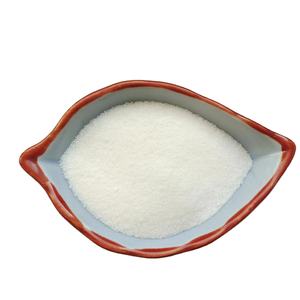
(Water Reducer)
When I developed this firm, I saw an essential void between what concrete can achieve and what it was supplying on building websites around the world. The vision was simple: create a water reducer that would certainly change concrete from a variable, unpredictable material right into an engineered remedy with constant, trustworthy efficiency. Today, enjoying our powder polycarboxylic acid water lowering representative enable stronger, extra durable, and even more lasting concrete throughout 5 continents, I boast of what our group has actually achieved and thrilled of what exists ahead.
The trip from laboratory idea to global market requirement has been challenging, however every barrier conquered has strengthened our dedication to high quality, development, and customer partnership. Our powder polycarboxylate superplasticizer stands for not simply a product yet an approach: that premium chemistry, combined with deep understanding of consumer needs, can develop a better world. As we look to the future, we remain committed to advancing water reducer innovation, lowering ecological influence, and assisting our consumers accomplish amazing results with every put. The story of the water reducer is much from total, and we are recognized to continue writing it alongside the engineers, professionals, and home builders that trust our products to provide performance where it matters most.
10. Vendor
Cabr-Concrete is a supplier of Concrete Admixture with over 12 years of experience in nano-building energy conservation and nanotechnology development. It accepts payment via Credit Card, T/T, West Union and Paypal. TRUNNANO will ship the goods to customers overseas through FedEx, DHL, by air, or by sea. If you are looking for high quality Concrete Admixture, please feel free to contact us and send an inquiry.
Tags: superplasticizer, water reducer, water reducing agent, concrete additives
All articles and pictures are from the Internet. If there are any copyright issues, please contact us in time to delete.
Inquiry us